4 December 2025,
Thursday


4 December 2025,
Thursday

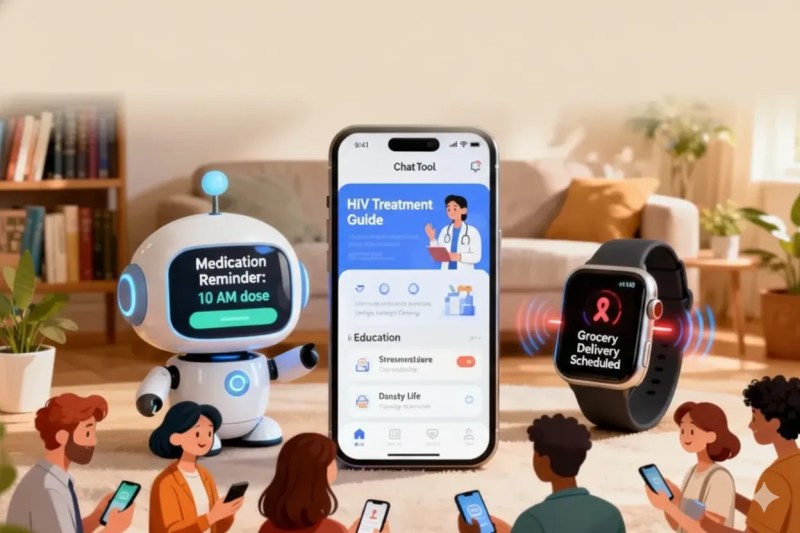
Image: AI
HIV / AIDS: According to a joint report by the Centers for Disease Control and Prevention and the WHO (WHO), AI tools can prevent 30% of cases by providing alerts before HIV infection occurs.
AIDS day: Machine learning models predict risk from patient data, symptoms, and behaviour, such as predicting HIV incidence with 94% accuracy in patients with sexually transmitted infections. Chatbots encourage testing through confidential conversations, while risk prediction tools identify PrEP candidates.
The Ruru model of Alliance for Public Health (APH) in Ukraine proved 37% better in case finding. In India, NACO National AIDS Control Organisation (NACO) is launching its AI model, which will alert 1 lakh high-risk people by 2026. These tools provide real-time alerts from wearable data and social media, but data privacy must be ensured. Experts believe that AI can prevent 5 million new infections globally each year.
Machine learning-based risk prediction tools, such as the Random Forest model, identify HIV risk from EMR data. In America and Denmark, they identify PrEP candidates with 85% accuracy. In a Georgia study, an ML model targeted high-risk groups for patients with sexually transmitted infections. These tools score demographic and behavioural data, accelerating testing and prevention.
Chatbots, such as Malaysia's HIV Testing Bot, have proven useful for 93% of users. They provide confidential advice, encourage self-testing, and reduce stigma. In a Hong Kong trial, 528 people received counselling from a chatbot, which was as effective as traditional methods. In Singapore, they increase PrEP awareness.
The MySTIRisk AI tool, developed in Australia, assesses HIV and sexually transmitted infection risk. In the free version, 90% of users expressed a desire to use it. It sends pathology forms and provides high-accuracy alerts. A discrete choice experiment revealed that users prioritise accuracy and privacy.
RNN models predict risk through time-series analysis of wearable data. They provide alerts for new infections from lab tests and imaging. Social media analytics track stigma and misinformation. Ukraine's Alliance for Public Health (APH) ML tool achieved a 5.2% detection rate.
Big News
View AllBihar Election
National News
Trending